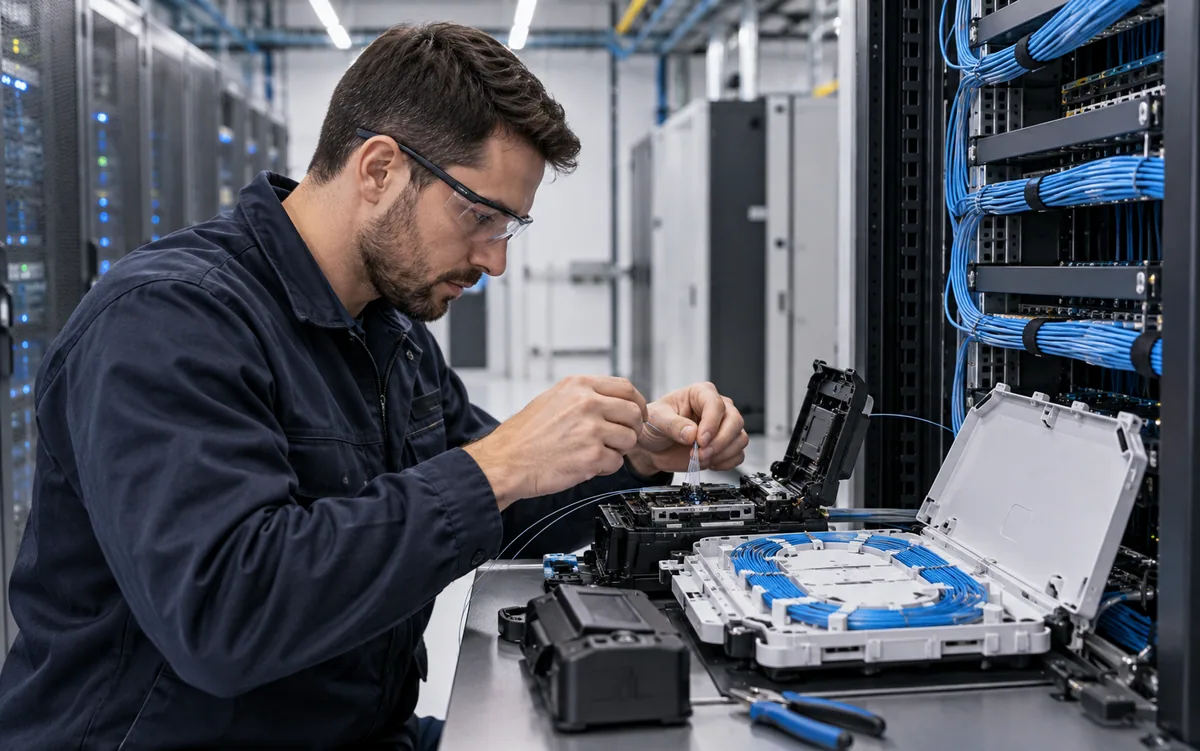
Fiber-Optic Networks
Design, installation, splicing, measurement and certification of optical links for high capacity, low latency and future growth.

Telecommunications
Fiber-optic, copper, Wi-Fi, IP voice and radio link infrastructure designed for performance, security and continuity.
Cameras, access control and management platforms all depend on the network. That's why we design telecommunications for capacity, availability, segmentation and growth.

Documented, measurable infrastructure built to support voice, data, electronic security and critical operations.
Design, installation, splicing, measurement and certification of optical links for high capacity, low latency and future growth.
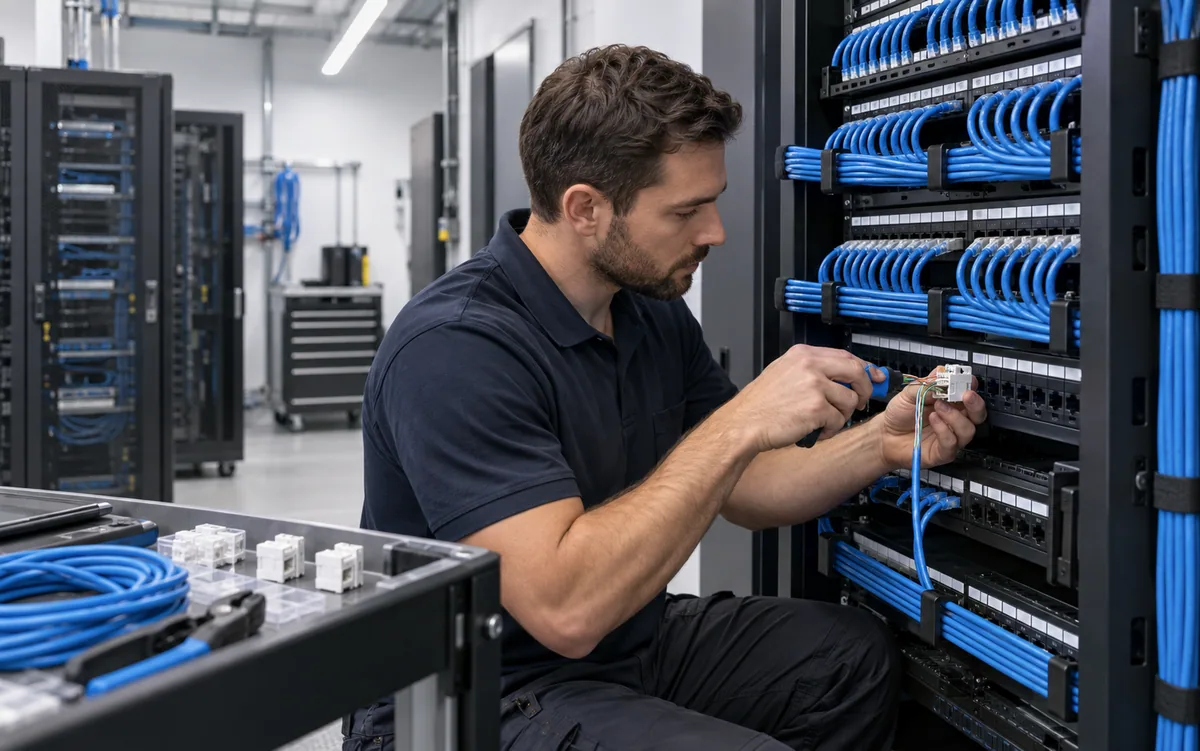
Organized structured cabling for data, voice and IP devices, with labeling, documentation and testing.

Enterprise wireless network design based on coverage, capacity, user density, mobility and security.

Voice solutions, extensions, IVR, recording, mobility and integration with collaboration platforms.
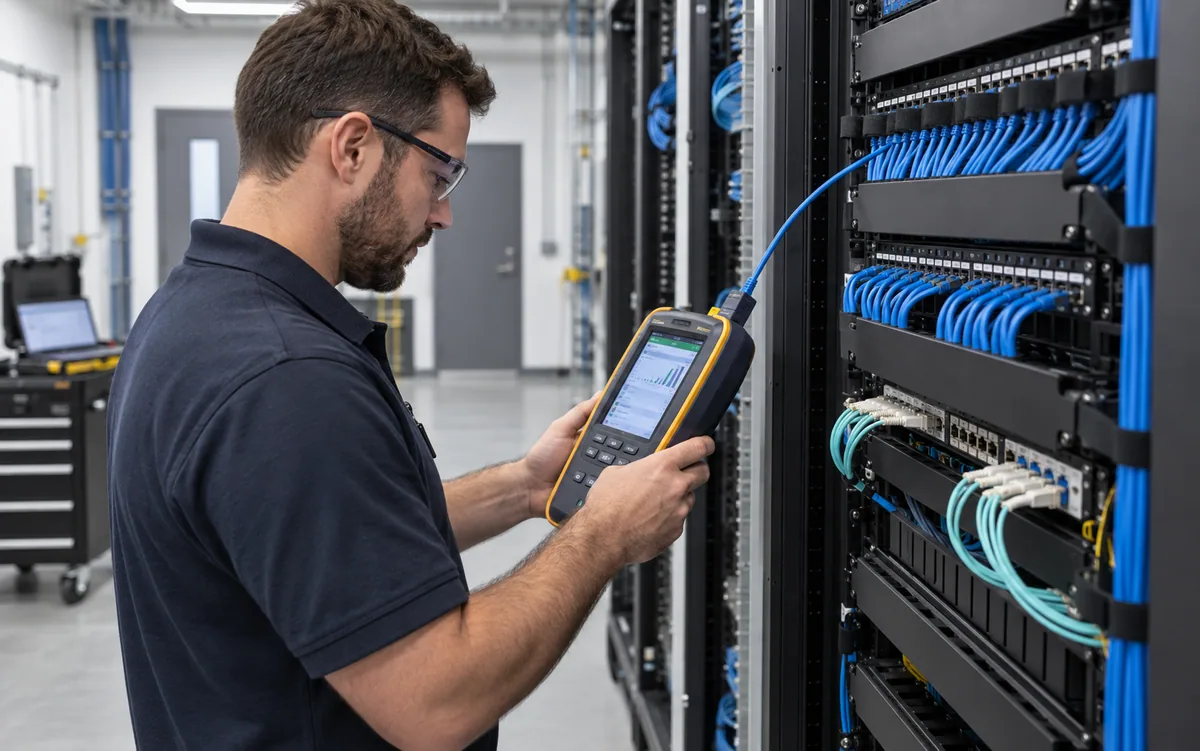
Measurements, documentation and validation of copper and fiber-optic cabling performance.

Site surveys, simulation and coverage validation to optimize access point placement, power and capacity.
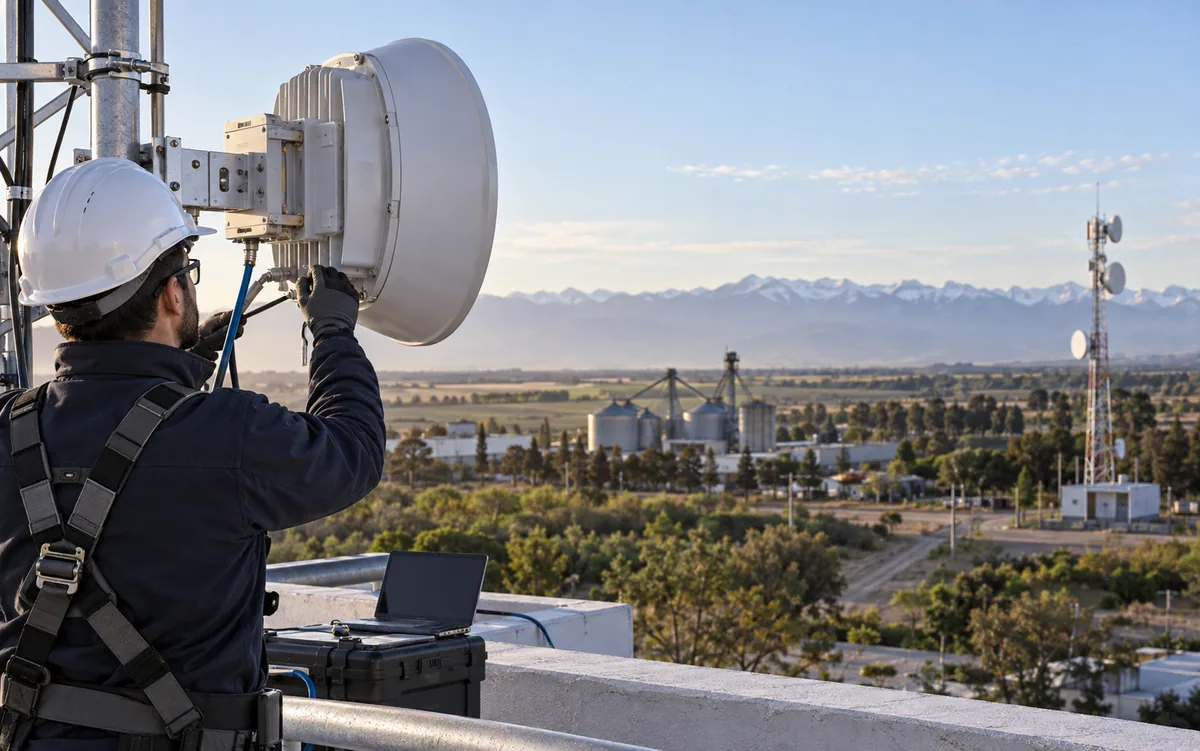
Wireless interconnection of offices, plants, rural properties and remote sites with radio link design and redundancy.
Fiber is well suited to backbones, long distances, interference-prone environments, high-capacity links and projects that need to scale. Design must account for connectors, redundancy, measurements and the optical power budget.
Coverage does not guarantee capacity. A site survey helps estimate interference, materials, density, mobility and demand so access points can be properly positioned and configured.
It means testing an installed link with appropriate instruments and documenting whether it meets the requirements for its category or technology.
Yes. Depending on distance, line of sight and local availability, options include radio links, fiber, service providers or a combined redundant architecture.