
A thermal camera makes differences in infrared radiation visible. In industry, it can help detect hot spots, monitor processes or protect perimeters without visible light. However, thermal imaging is not an X-ray, and measuring temperature requires specific technical conditions.
Detection and measurement are not the same
A camera designed to detect people may not measure temperature. To obtain readings, a radiometric model with suitable range and accuracy is needed, along with settings for emissivity, distance, reflected temperature and environmental conditions.
Preventive applications
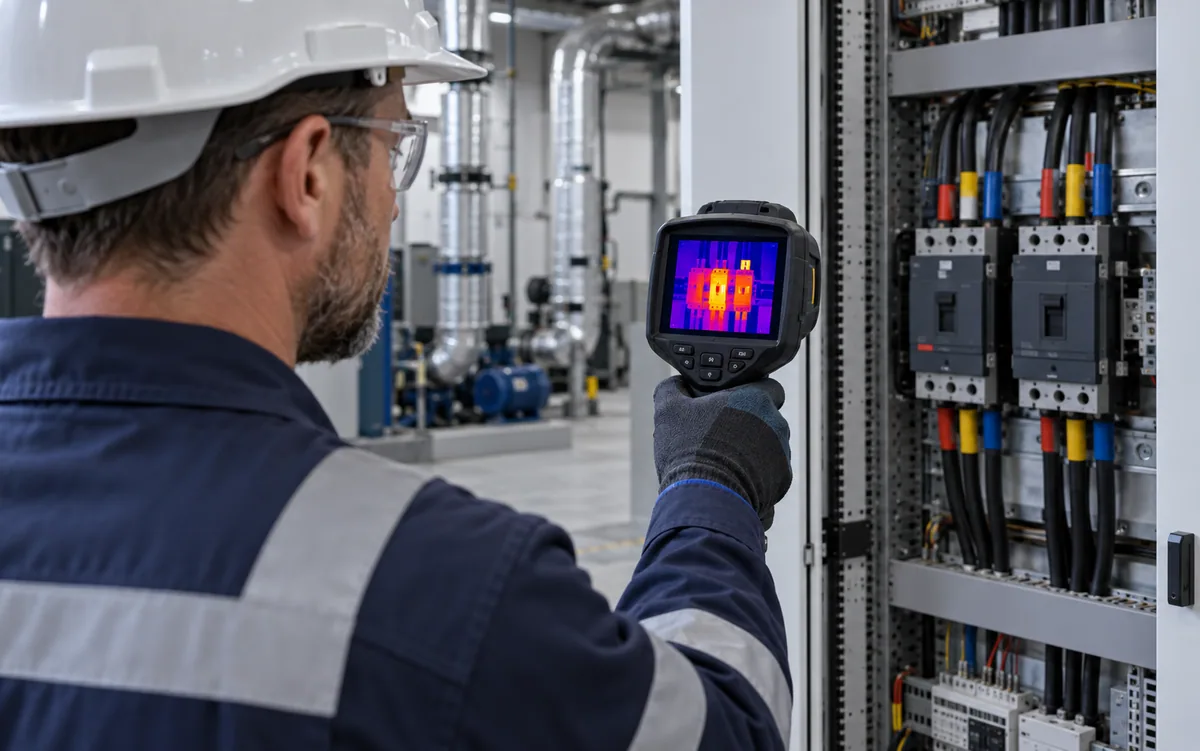
Electrical panels, connections, motors, bearings, conveyors, furnaces and stored materials can be supervised using zones and thresholds. Alarms must be linked to verification and a responsible maintenance team.
Perimeter protection
Thermal imaging can detect people or vehicles at night and where visible lighting is limited. Actual range depends on target size, lens, thermal contrast and whether the goal is detection, recognition or identification.
Common mistakes
Measuring through ordinary glass, ignoring reflections, using extreme viewing angles or comparing surfaces with different emissivity can lead to incorrect readings. A thermal alarm must not be confused with a certified fire detection system.
Verifiable design
Before implementation, define the minimum event, distance, response time, required accuracy and most demanding conditions. Then test thresholds with real scenarios and document the configuration.