Early warning
More time to verify events and implement response procedures.

Early detection
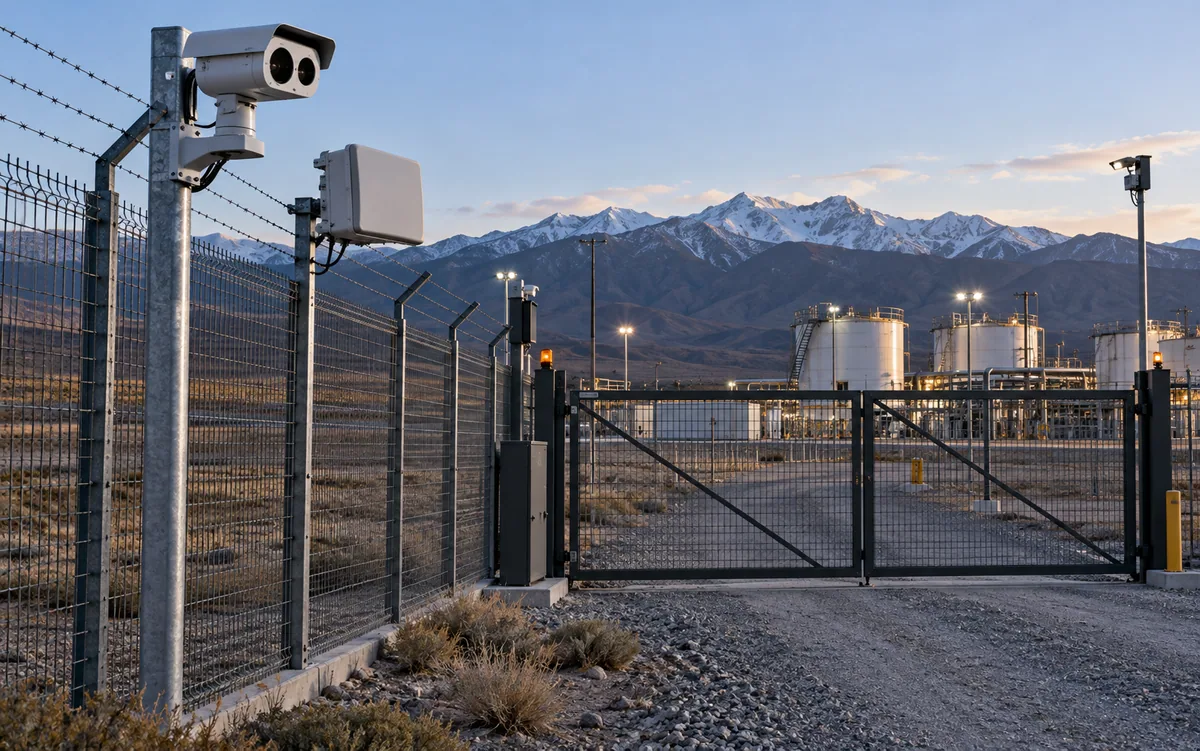
Perimeter protection combines detection layers to warn of crossings, cuts, climbing or movement in outdoor areas before a threat reaches buildings or critical assets.
Large perimeters face weather, vegetation, animals, changing light and blind spots. A single sensor rarely covers every condition without false alarms.
Coverage in Argentina: TECA designs and integrates projects for businesses, industries, institutions and distributed operations in Buenos Aires and other regions of Argentina.
More time to verify events and implement response procedures.
Video, thermal imaging, fences and complementary sensors for each section.
Centralized images and events to distinguish intrusions from environmental causes.
Important limitation: The design must measure and adjust false alarms. Maximum sensitivity without classification or maintenance can overwhelm operators and reduce real responsiveness.
It depends on terrain and risk. Solutions may combine thermal cameras, analytics, sensor fences, barriers or radar.
Thermal imaging and infrared lighting allow operation in low light, provided the scene and range are properly designed.
By choosing the right technology, setting zone rules, calibrating, using dual verification and maintaining vegetation and equipment.
Yes, with secure communications and a local strategy for recording, contingencies and response.
Tell us about your facility, the issue and your expected outcome. TECA can assess existing infrastructure and propose a phased implementation.