
AI-powered video is useful when it turns a scene into an event that someone can verify and manage. This is not about adding an AI label to a camera, but defining which situations matter, the required detection accuracy and what happens after an alert.
What changes compared with traditional monitoring
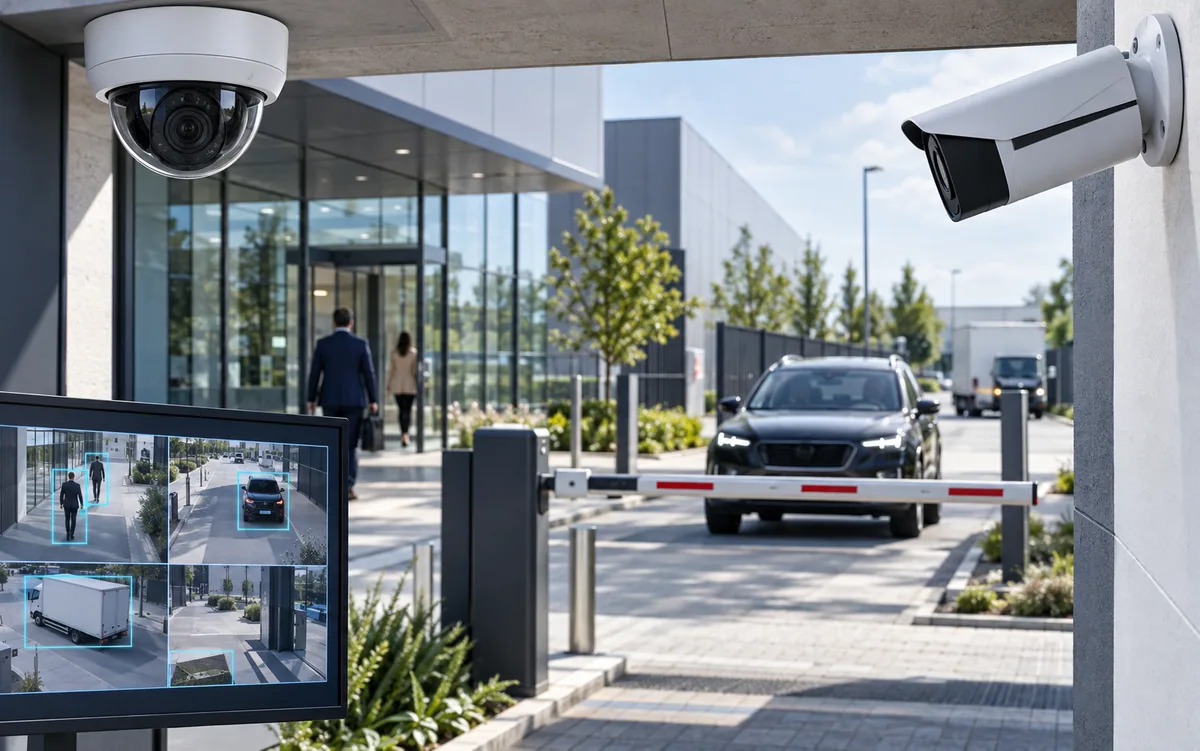
In traditional monitoring, an operator must identify relevant activity among many images. Analytics reverses the process: it checks specific rules and presents prioritized events. It can classify people and vehicles, detect line crossings, dwell time, objects or the absence of defined equipment.
The scene determines performance
Accuracy depends on target size, lighting, angle, occlusions, speed and image stability. A camera positioned only for a broad view may not deliver enough pixels for demanding analytics. That's why analytics must be designed alongside optics, camera placement and the network.
How to reduce false alarms
Limit zones, schedules and object types, combine rules and review real events during commissioning. Vegetation, reflections, shadows, rain and repetitive movements must be considered. The goal is not maximum sensitivity but an alert rate the team can manage.
Integration and procedures
An alert becomes valuable when it displays video, records the event and activates a procedure. It can integrate with access control, intrusion systems, loudspeakers or a monitoring center. It also needs clear ownership, verification time, escalation paths and evidence retention periods.
Questions to ask before buying
Which exact event do we want to detect? What would failing to detect it cost? What error rate is acceptable? Does the current camera offer a suitable view? Who will receive and manage the alert? These answers allow solutions to be compared by operational criteria, not just marketing specifications.