Unified view
One coordinated console for video, alarms, access and communications.

Centralized operations
A monitoring center brings together cameras, alarms, access systems, communications and procedures so operators can receive, verify, document and escalate events from one platform.
Multiple isolated systems increase response times and make it harder to reconstruct events. The value of a control center is not just its screens: ergonomics, alarm prioritization, continuity and procedures all matter.
Coverage in Argentina: TECA designs and integrates projects for businesses, industries, institutions and distributed operations in Buenos Aires and other regions of Argentina.
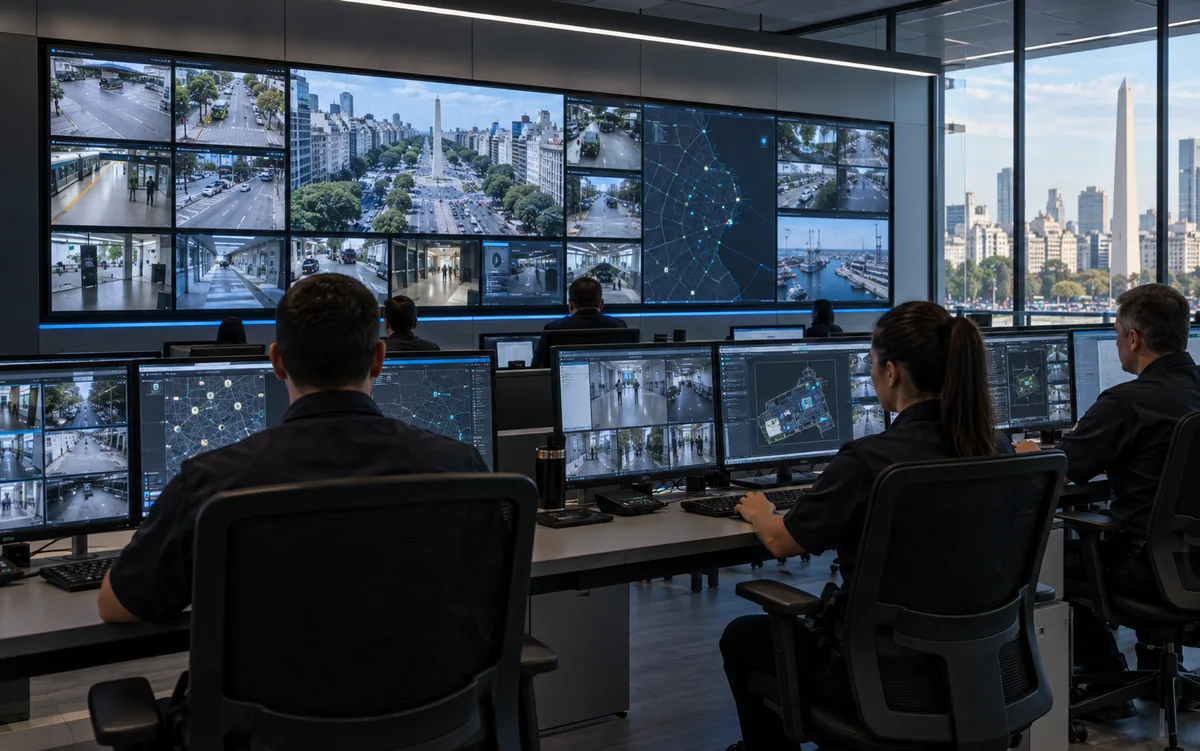
One coordinated console for video, alarms, access and communications.
Procedures and escalation paths defined by event type and criticality.
Logs of alerts, actions and evidence for audits and continuous improvement.
Important limitation: A large video wall does not compensate for poorly configured alarms or incomplete procedures. Architecture should be designed around the operator's decisions.
It may integrate video surveillance, intrusion and fire alarms, access, GPS, intercoms, analytics and management platforms, subject to compatibility.
Yes. Networks and communication security can be designed to centralize events from distributed sites.
Local recording, redundant links, UPS, generators and contingency procedures are assessed according to criticality.
The scope may include technology architecture, workstations, video walls, communications, documentation and subsystem integration.
Tell us about your facility, the issue and your expected outcome. TECA can assess existing infrastructure and propose a phased implementation.